If you have crypto (for example USDT) sitting idle, is there a way to make it "work for you"?Crypto lendingis one option. This article explains in plain language what crypto lending is, where the interest comes from, what the risks are, and how beginners can get started.
Prefer video? Watch the 7-minute version:
What Is Crypto Lending?
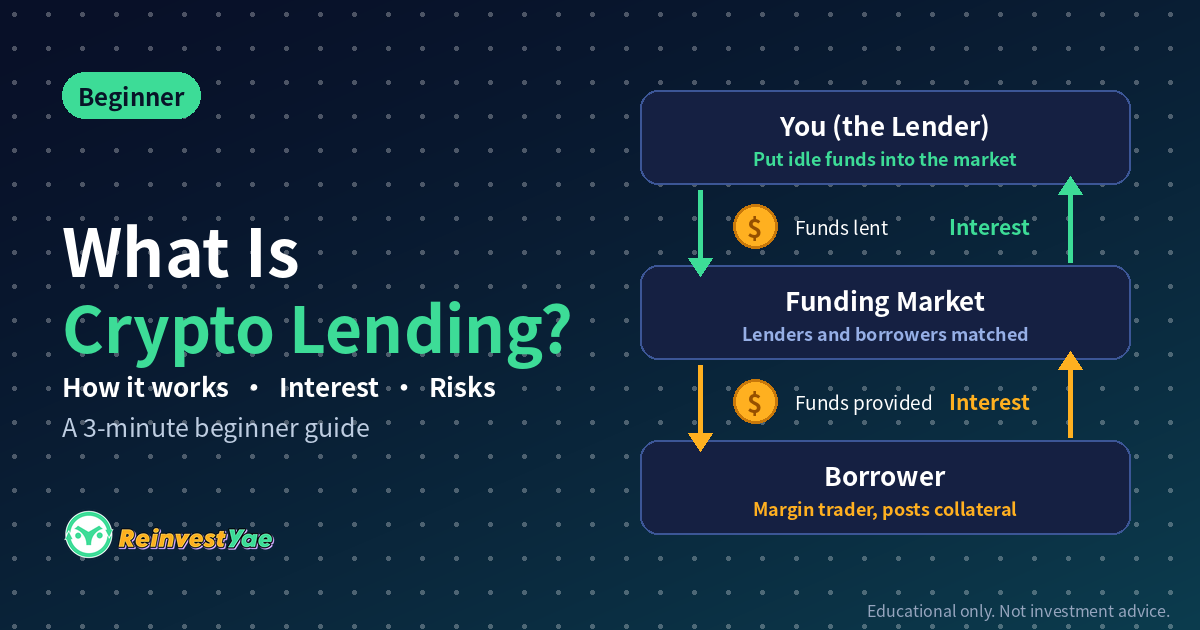
Crypto lending simply meanslending your crypto assets to people who need funds and earning interest while the funds are lent out.It works like lending money to someone for interest, except everything happens on a crypto platform.
Take an exchange like Bitfinex as an example. It has a "funding market": some people want to borrow funds for leveraged (margin) trading, others are willing to lend funds to earn interest, and the platform matches the two sides. You are the lender. Once your funds are lent out, interest accrues daily, and at maturity your principal and interest return to your wallet.
How Crypto Lending Works
Using the Bitfinex funding market as an example, the process has four steps:
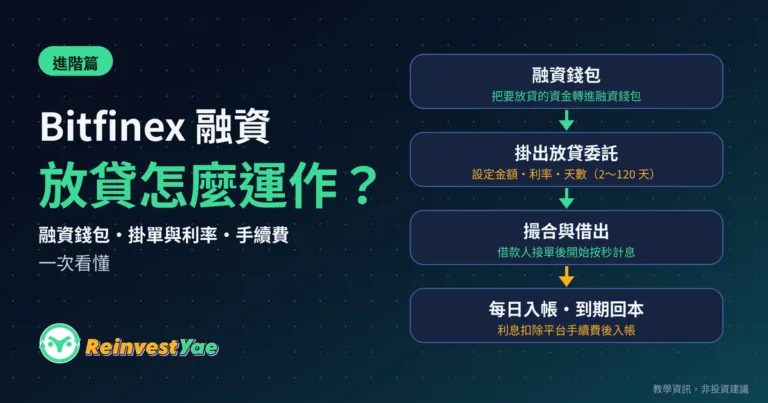
- Move funds into your funding wallet:Open an account on the exchange, then transfer the assets you want to lend into your funding wallet.
- Place a lending offer:You choose the amount, annualized rate and number of days, and the system puts your offer into the market.
- Wait for a borrower:When a borrower accepts your terms, your funds are lent out and start earning interest.
- Collect principal and interest at maturity:Interest is credited daily while the loan is active. At maturity your principal returns to your wallet, and you can place a new offer or withdraw.
One important point: once funds are lent out,you cannot get them back until the loan matures.The longer the lending term, the longer your funds are locked, so keep aside any money you may need flexibly.
Where Does the Interest Come From?
The interest comes fromthe borrowing costs paid by borrowers.Borrowers are usually margin traders who borrow funds to enlarge their positions and pay interest for it. After the platform's fee, that interest is the lender's income.
Rates are not fixed. They are set by supply and demand: when borrowing demand is high and few funds are offered, rates rise; when funds are plentiful and demand is low, rates fall. That is why lending returnsfluctuate with the market and are never guaranteed.Be careful with anyone promising "stable high returns."
To see roughly how much interest different rates and amounts could produce, try ourearnings calculator.It is only an illustration to help you understand, not an actual result.
What Are the Risks of Crypto Lending?
Lending is not risk-free. Beginners should understand these first:
- Platform risk:Your funds sit on the exchange. If the platform has operational problems, gets hacked or restricts withdrawals, your funds may be affected. When choosing a platform, look at its history, regulation and security record.
- Borrower default risk:Borrowers usually post collateral, and the system liquidates positions when collateral falls short to protect lenders. In extreme markets, however, full repayment may still not be possible.
- Rate risk:Market rates can fall, and your offers may sit unmatched for a long time, so actual earnings can be lower than expected.
- Liquidity risk:Once lent out, funds cannot be used until maturity.
- Operational and security risk:Poorly protected API keys, passwords or two-factor authentication can lead to losses.
We suggest using only funds thatyou can afford to risk and will not need soon.Do not put all your assets in. To learn more about how we approach fund safety, read oursecurity overview.。
How Is Crypto Lending Different from Savings Deposits and Staking?
All three aim to make your assets earn something, but they work differently:
- Bank deposits:Protected by schemes such as deposit insurance. Rates are low but relatively stable.
- Staking:Tokens are locked into a blockchain network to help validate transactions. Rewards come from the network, usually with a lock-up period and token price risk.
- Lending:Funds are lent to traders. Earnings come from borrowing interest, rates float with the market, and the main risks are the platform and borrowers.
None of them is "always better." The difference lies in the risk you can accept, the liquidity you need, and how much time you are willing to spend managing it.
Do You Have to Watch the Market All the Time? Why Do People Use Automation?
The hassle with manual lending is that rates keep changing and you must re-place offers every time a loan matures. Any idle funds earn no interest. That is why many people use anautomation toolthat keeps placing offers according to preset rules, so they do not have to watch the market around the clock.
ours ReinvestYae is exactly this kind of automated lending tool: you keep control of your funds and your account, and the bot places offers for you through an API. We never touch your funds and never promise returns. What we sell is automation. To understand how it works, seeHow It WorksorGuidesfollow the steps in the
How Do Beginners Start Crypto Lending?
- Understand the basics and risks:After reading this article, make sure you understand that funds get locked and earnings fluctuate.
- Choose a platform and complete identity verification:Lending usually requires identity verification, so allow some time.
- Start small:Begin with a small amount to get familiar with offers, rates and terms.
- Decide between manual and automated:If you want to save time and reduce idle funds, consider an automation tool.
- Review regularly:Watch platform announcements, rate changes and your allocation, and adjust when needed.
If you want to try automated lending, you cansign up for the free FREE plan,orcompare the plans.。
Frequently Asked Questions (FAQ)
Is crypto lending safe?
Nothing is completely safe. Lending carries platform risk, borrower default, rate fluctuation and liquidity risk. Use only idle funds you can afford to risk, and choose a platform with a solid reputation and security record.
Is the lending interest rate fixed?
No. Rates are set by market supply and demand and change all the time. Actual earnings are not guaranteed.
Can I withdraw lent funds at any time?
Offers that have not been matched can be cancelled. Funds that are already lent out cannot be withdrawn until the loan matures.
How much money do I need to start?
Minimums differ by platform and tool. On Bitfinex, each currency has a minimum lending amount (about USD 150 equivalent), so beginners can start with a small amount.
Is lending interest taxable?
Tax rules differ by country and region and may change over time. Please check with an accountant or tax professional about your own reporting obligations.
Do I have to use an automation tool?
No. You can place offers manually, but you need to watch rates and re-place offers after each maturity. The benefit of automation is fewer idle funds and less time spent watching the market.
Risk disclaimer:This article is for education and information only. It is not investment advice and does not guarantee any returns. Crypto involves market, platform and operational risks. Please evaluate carefully based on your own risk tolerance.